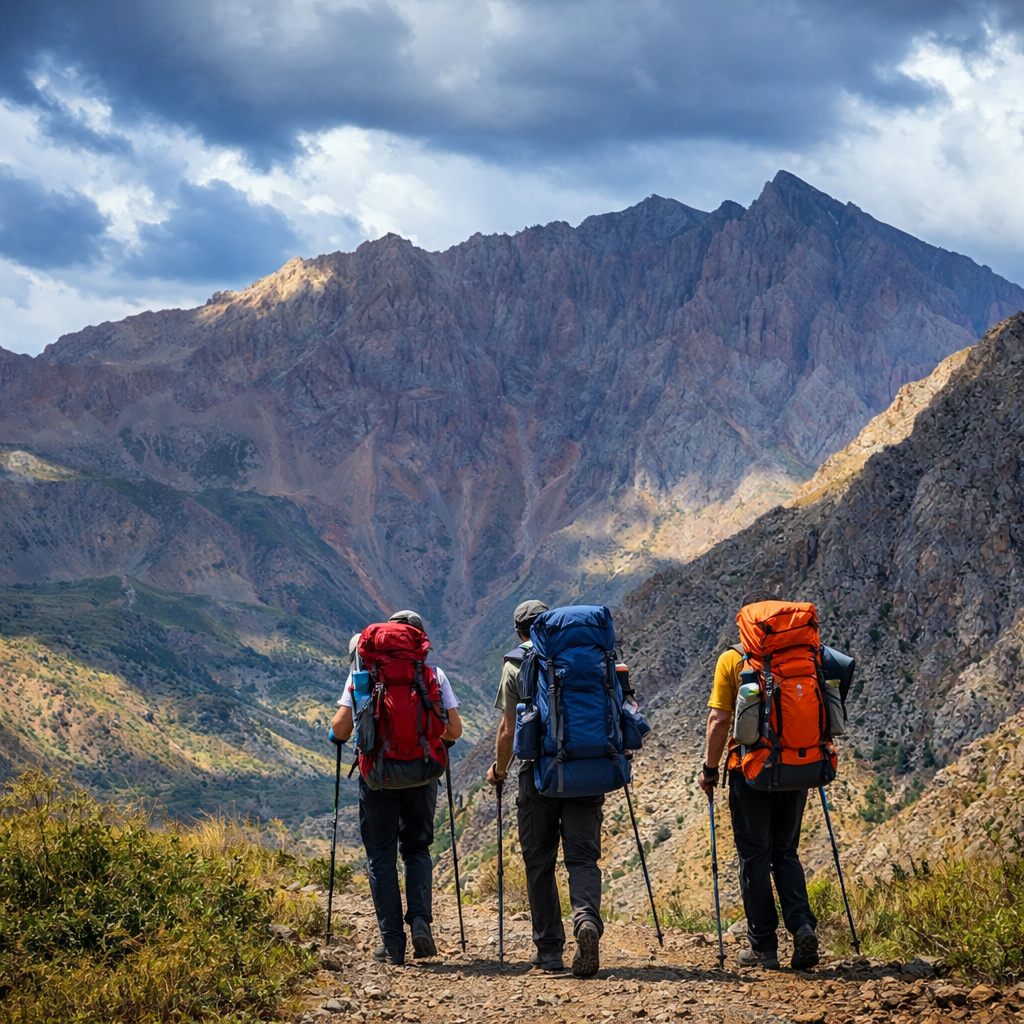
Fann Mountains Trekking

The Fann Mountains are one of the most spectacular trekking destinations in Central Asia. Located in the Pamir-Alay system of Tajikistan, this region offers alpine lakes, dramatic rock walls, and high mountain passes reaching up to 4500 meters.

This 12–14 day trekking program is a complete trans-Fann route, crossing the mountains from north to south and finishing in the legendary Seven Lakes region.

Duration: 12–14 days
Region: Fann Mountains, Tajikistan
Grade: Moderate to challenging
Season: June – September
Start: Samarkand (Uzbekistan)
Finish: Seven Lakes (Tajikistan)

Why Choose This Trek?

  • Complete crossing of the Fann Mountains
  • Iconic alpine lakes: Kulikalon, Alauddin, Mutnye, Allo
  • High mountain passes up to 4500 m
  • Remote wilderness with minimal infrastructure
  • Flexible trekking formats: from expedition style to комфорт

Route Highlights

  • Kulikalon Lakes beneath 5000 m peaks
  • Alauddin Lakes – the most famous lakes of the Fanns
  • Mutnye Lakes under Chimtarga (5489 m)
  • Chimtarga Pass (4500 m)
  • Allo Lakes and Zindon Valley
  • Seven Lakes (Haft Kul)

Day-by-Day Itinerary

Day 1 – Transfer to Artuch Base
Cross the Uzbekistan–Tajikistan border near Samarkand. Transfer via Pendjikent to Artuch Mountain Base. Optional acclimatization hike to Chukurak and Ziyorat lakes.

Day 2 – Kulikalon Lakes
Trek over an easy pass to Kulikalon Lakes (2800 m). Camp at Bibi-Djanat Lake under massive rock walls.

Day 3 – Alauddin Pass (3730 m)
Cross Alauddin Pass and descend to the famous Alauddin Lakes.

Day 4 – Mutnye Lakes (3430 m)
Trek to Mutnye Lakes beneath Chimtarga Peak. Establish high camp.

Day 5 – High Camp (4500 m)
Move to high camp below Chimtarga Pass. Overnight at altitude.

Day 6 – Chimtarga Pass (4500 m)
Cross the highest pass of the trek. Long descent to Greater Allo Lake (3140 m).

Day 7 – Zindon & Archamaidan Valleys
Descend along Zindon River, continue via Archamaidan Valley. Camp near Sarymat confluence.

Day 8 – Munora Approach
Trek toward Munora Pass. Optional light exploration of side valleys.

Day 9 – Munora Pass
Cross Munora Pass and descend into Sarymat Valley.

Day 10 – Tavasang Pass (3450 m)
Cross Tavasang Pass and reach Marguzor (Seven Lakes).

Day 11 – Rest Day
Explore the Seven Lakes area.

Day 12 – Return
Transfer back toward Uzbekistan.

Trekking Formats & Pricing

Note: Prices are per person in USD, based on a minimum group of 3 participants. Final cost depends on logistics, season, and services.

1. Classic Trek (Backpack)

~70 USD per day

Participants carry part of the expedition gear. The guide acts only as a route leader (not a porter or cook). Requires good physical condition. The most authentic and budget option.

2. Classic Trek (Pack Animals Support)

~100 USD per day

Part of the equipment is transported by horses or mules. Participants still carry personal gear. Balanced option between effort and comfort.

3. Trek Without Backpacks

~160 USD per day

Main load is transported by pack animals. Participants hike with light daypacks only. Ideal for enjoying landscapes with reduced physical strain.

4. Comfort Trek (With Cook)

~180 USD per day

Full-service trekking with pack animals and a professional cook. The guide focuses on safety and route management. Maximum comfort in mountain conditions.

Difficulty Level

This trek is moderate to challenging. It includes multiple high passes up to 4500 m and requires good physical fitness. No technical climbing skills are required.

Who Is This Trek For?

  • Experienced hikers and trekkers
  • Adventure travelers seeking remote regions
  • Photographers and nature lovers
  • Climbers preparing for higher altitude expeditions

Plan Your Trek

Tell us your preferred trekking format, duration, and experience level — we will customize the route for you.

Supplier of services: ClimberCA International Consortium.
https://t.me/ClimberCA – telegram
+7966 065-53-44 – whatsapp/viber
e-mail: your@climberca.com
Note: ClimberCA provides top-quality services at competitive prices. Explore the full range of services on the website—some are truly unique and unmatched on the market.
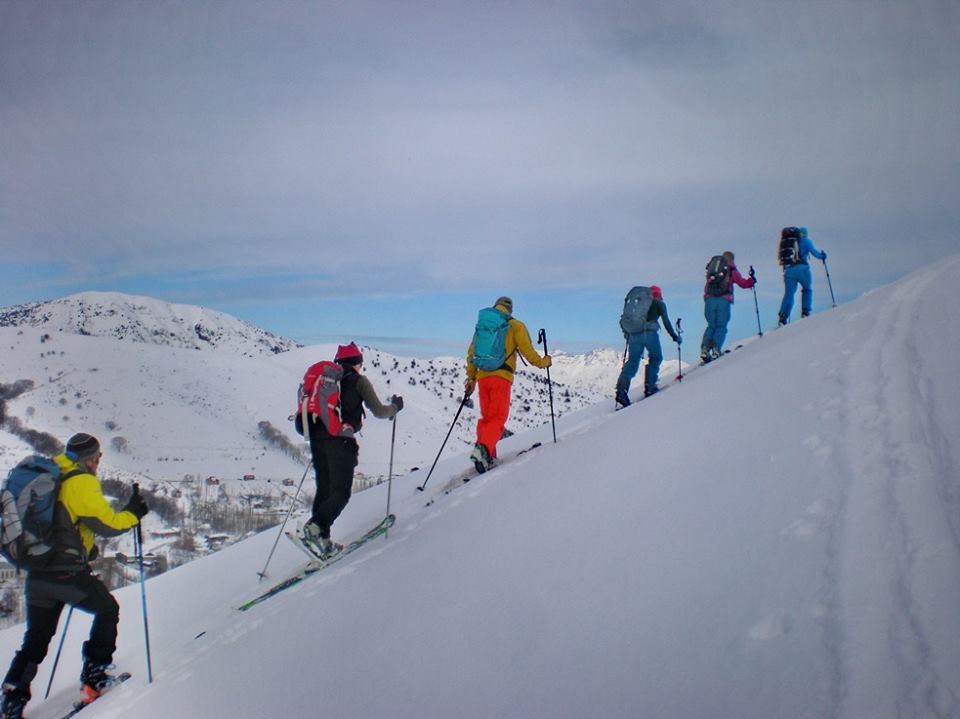
Ski touring & freeride program in Uzbekistan

Ride the Western Tien Shan and discover the Silk Road in one journey.

This 8-day winter adventure combines ski touring and freeride riding in the Chimgan mountains and Amirsoy resort with guided cultural visits to Bukhara and Samarkand.

Duration: 8 days / 7 nights
Locations: Chimgan, Amirsoy, Bukhara, Samarkand
Style: ski touring + freeride + cultural travel
Level: intermediate to advanced riders

Why Choose This Tour?

  • Ski touring and freeride in the Western Tien Shan
  • Off-piste terrain near Chimgan and Amirsoy
  • One program combining mountains and Silk Road cities
  • Professional guiding and organized logistics

Who Is This Tour For?

  • Skiers and snowboarders with off-piste experience
  • Travelers looking for a unique winter destination
  • Riders who want both mountain adventure and cultural travel

Day-by-Day Program

Day 01 – Arrival / Chimgan
Arrival in Tashkent. Meet at the airport and transfer to Chimgan. Hotel check-in.
If time permits, introduction to the Chimgan ski area.

Day 02 – Chimgan Ski Touring
Acclimatization and ski touring on the Western Ridge of Chimgan.
Start elevation: 2,350 m. Vertical descent: 600 m. Possible to repeat the route twice.

Day 03 – Amirsoy Freeride
Transfer to Amirsoy Ski Resort. Freeride descents in wide off-piste terrain with smooth relief.
Optional descent from Maygashkan toward Beldersay for experienced backcountry riders.

Day 04 – Kiziljar Peak
Ski tour ascent to Kiziljar Peak (1,866 m). Freeride descent toward Chimgan.

Day 05 – Small Chimgan Peak
Ascent to Small Chimgan (2,100 m). Descent toward Charvak Lake, or repeat the best freeride line depending on snow conditions.

Day 06 – Best Line Repeat / Night Train
Final ski day – repeat the most exciting descent of the trip. Transfer to Tashkent railway station. Overnight train to Bukhara.

Day 07 – Bukhara
Arrival in Kagan, transfer to Bukhara, breakfast, guided city tour, evening train to Samarkand.

Day 08 – Samarkand / Departure
Arrival in Samarkand, guided city tour, high-speed train to Tashkent, transfer to airport. End of program.

What’s Included

  • Airport and railway transfers
  • Professional guide service
  • Accommodation in Chimgan hotel
  • Registration support
  • Railway tickets: Tashkent – Bukhara – Samarkand – Tashkent
  • City guides in Bukhara and Samarkand
  • Breakfasts in Chimgan, Bukhara and Samarkand

Not Included

  • Meals except listed breakfasts
  • Skipasses and lift charges
  • Entrance tickets in Bukhara and Samarkand
  • Ski / snowboard rental and personal equipment

Price

Price on request — depends on group size, riding format, and services required.

Best Season

The best time for ski touring in the Chimgan region is late January to March.

Book Your Ski Adventure

Tell us your riding level, preferred dates, and whether you ski or snowboard — we will suggest the best version of the program for you.

Telegram: https://t.me/ClimberCA
WhatsApp: +998 97 700 98 46

Read the detailed guide on ClimberCA →

Uzbekistan Rock Climbing

Rock climbing in Uzbekistan offers a unique opportunity to explore wild mountain landscapes, Soviet-era climbing routes, and untouched rock formations in the Western Tien Shan. Just a short drive from Tashkent, climbers can access multiple climbing areas combining sport routes, trad climbing, and bouldering.

This multi-day climbing tour takes you through the most iconic climbing regions of Uzbekistan: Khodjikent, Chimgan, and Beldersay — with the option to extend your experience to Yangiabad.

Why Choose Rock Climbing in Uzbekistan?

  • Legendary Soviet climbing areas with authentic routes
  • Variety of styles: sport climbing, trad, and bouldering
  • Minimal crowds and unexplored rock potential
  • Access to several climbing areas within one trip
  • Friendly team atmosphere and professional guidance

Main Climbing Areas

Khodjikent (Bulaksu Gorge)

Climbing in Khodjikent is known for its diverse rock formations and bolted routes along the Bulaksu River. This area is ideal for both beginners and intermediate climbers.

Chimgan (Aksay Gorge)

The Chimgan mountains are considered the birthplace of mountaineering in Central Asia. The Aksay gorge offers routes of different difficulty levels in a scenic alpine environment.

Beldersay

Beldersay is a promising area for bouldering and easier climbing routes. It is perfect for technique development and relaxed climbing sessions.

Note: For a detailed overview of the legendary Yangiabad climbing area, see our guide:
Yangiabad Rock Climbing Guide →

Climbing Styles

  • Sport Climbing: Bolted routes (5B–7B)
  • Top Rope Climbing: Accessible and safe for beginners
  • Trad Climbing: Selected routes in classic style
  • Bouldering: Natural blocks and developing sectors

7-Day Rock Climbing Program

This itinerary combines several climbing areas and includes trekking between locations, creating a true adventure-style climbing experience.

Day 1 – Tashkent → Khodjikent

Transfer to Khodjikent (78 km, ~2 hours). Approach along the Bulaksu river. Climbing on routes (5B–7A). Camp setup.

Day 2 – Climbing in Bulaksu

Full day of climbing. Optional excursion: ancient bazaar, petroglyphs, and historic sites.

Day 3 – Trekking to Chimgan

Cross Bulaksu, Akshuran, and Archaly passes. Arrival to Aksay gorge (Chimgan). Camp.

Day 4 – Climbing in Aksay Gorge

Routes up to 6B. Combination of top rope and lead climbing.

Day 5 – Marble River Area

Transfer and approach to Marble River. Easy routes and bouldering.

Day 6 – Intensive Climbing & Bouldering

Climbing up to 7B. Technique sessions and top rope climbing (6A).

Day 7 – Final Climbing & Return

Final climbing session and return to Tashkent.

Best Time to Climb

The best season for rock climbing in Uzbekistan is from June to October. Spring and autumn also offer excellent conditions depending on weather.

Tour Details

  • Duration: 7 days
  • Location: Western Tien Shan, Uzbekistan
  • Start/Finish: Tashkent
  • Format: Guided climbing tour with trekking elements

What’s Included

  • Professional climbing guides
  • Group climbing equipment and tents
  • Route planning and logistics
  • Meals during the program

Not Included

  • Transport to/from climbing areas
  • Insurance
  • Personal equipment (sleeping bag, personal gear)

Who Is This Tour For?

  • Beginner and intermediate climbers
  • Sport climbers exploring new destinations
  • Adventure travelers combining trekking and climbing
  • Climbers interested in Central Asia

Plan Your Climbing Trip

This tour combines climbing, mountain travel, and cultural experience into one unique journey. Uzbekistan remains one of the last authentic climbing destinations with huge unexplored potential.

Contact us to organize your climbing tour:

WhatsApp: +998 97 700 98 46
Telegram: https://t.me/ClimberCA
Email: your.climberca@ya.ru

Peak Korzhenevskaya is the third-highest peak in the Pamir range and one of the five required summits for the prestigious “Snow Leopard” award. Located on the Academy of Sciences Range, approximately 13 km from Peak Communism (Ismoil Somoni), its classic ascent via the South Ridge (Tsetlin Route) is rated Russian Grade 5A. It is widely considered the second easiest of the former Soviet 7,000m peaks after Peak Lenin.


1. Overview & Approach

  • Route: South Ridge (The Classic Tsetlin Route).

  • Grade: 5A.

  • First Ascent: Team led by V. Tsetlin in 1966.

  • Vertical Gain: Approx. 3000m from Base Camp.

  • Base Camp: Moskvina Glade (4100m). A modern, well-equipped base camp situated between Peaks Korzhenevskaya and Communism, featuring modular accommodations, electricity, internet, a banya, and hot showers. Access is via helicopter from Dushanbe or the town of Jirgital.


2. The Easier Ground: Logistics & Comforts

Despite being a serious 7,000m peak, the classic route offers several factors that facilitate a successful climb:

  • Established Infrastructure: Moskvina Glade provides a high level of comfort. Helicopter access to the region eliminates a long, arduous trek-in, conserving energy for the climb.

  • Fixed Ropes: On all key technical sections, commercial operators (such as Ak-Sai Travel) fix permanent ropes, greatly simplifying progression and allowing climbers to travel with minimal technical gear. The main trail from Base Camp to the upper camps is well-trodden and distinct.

  • Spacious Camp Sites: The route features several naturally accommodating campsites:

    • Camp 5300m: Located on stable moraine.

    • Camp 5800m (The Grotto): Situated in a natural “pocket” beneath an overhanging rock wall, offering excellent protection from rockfall.

    • Camp 6400m: A vast, flat snow plateau on the ridge with ample room for numerous tents.

  • Moderate Technical Demand: Compared to other 7,000m peaks, the route is not overly technical. The primary challenges are altitude, endurance, and objective hazards rather than steep, technical rock or ice climbing.


3. The Challenges: Serious Hazards & Objective Dangers

The main difficulties stem from classic high-altitude mountain hazards.

  • The Icefall & Crevasses: The route begins immediately on the Moskvina Glacier, requiring negotiation of a heavily crevassed icefall. Movement must be roped and follow the marked trail diligently, as a crevasse fall is a primary risk.

  • Rockfall (The Most Serious Objective Hazard): This is arguably the greatest danger on the mountain. Significant sections of the route lie beneath unstable rock faces and scree slopes.

    • The slope from BC to Camp 5100m is a steep, loose scree field, prone to rockfall.

    • The traverse from Camp 5800m to the saddle at 6100m passes directly beneath seracs and rock bands, making it extremely dangerous from falling objects.

  • Altitude Acclimatization: Climbing to 7105m requires a rigorous acclimatization protocol. The standard schedule involves multiple rotations with nights at progressively higher camps (5100m, 5300m, 5800m, 6100m, 6400m) to allow physiological adaptation. Pushing too fast invites altitude sickness.

  • Volatile Weather: Conditions in the high Pamir are notoriously unstable. Sudden snowstorms and whiteouts can strike without warning, making navigation treacherous. Summit temperatures can plummet to -45°C.


4. The Technical Keys: A Section-by-Section Breakdown

The classic route can be broken down into four distinct sections, each with its own character.

Phase 1: Approach to the High Moraine (BC — 5300m)

  • Section: BC (4100m) → Camp 5100m → Camp 5300m.

  • Description: From Moskvina Glade, the trail leads onto the heavily crevassed Moskvina Glacier icefall. Following a marked route through this jumble of ice is critical. A steep climb up a loose, rockfall-prone scree slope leads to the site for Camp 5100m. From here, a short, steep ice slope (often with fixed lines) gains the moraine of the Korzhenevskaya Glacier, where Camp 5300m is established.

Phase 2: The Grotto and the Base of the Wall (5300m — 5800m)

  • Section: Camp 5300m → Camp 5800m (The Grotto).

  • Description: Above 5300m, the terrain transitions to snow. The route traverses right across a snow slope, keeping an eye out for crevasses (usually marked). The key feature here is a low ice wall, requiring the use of crampons and ice tools. Gaining the top of this wall leads directly to “The Grotto,” a safe and sheltered campsite tucked under a large rock overhang.

Phase 3: The Traverse and the Headwall (5800m — 6400m)

  • Section: Camp 5800m → The Saddle (6100m) → Camp 6400m.

  • Description: This is the most dangerous section of the climb due to high rock and icefall exposure. From The Grotto, a long, exposed traverse trends rightwards across the slope beneath the rock bands. This section must be crossed quickly and efficiently. The traverse ends at a broad snow saddle at 6100m (a small tent site). The route then tackles the steepest technical ground of the ascent: a 40-60 degree headwall combining rock, ice, and snow. Fixed ropes are usually in place here. Gaining the ridge crest above opens up onto the vast, flat snowfield of Camp 6400m.

Phase 4: The Summit Ridge (6400m — 7105m)

  • Section: Camp 6400m → Summit → Descent to Camp.

  • Description: From 6400m, the route follows a rolling ridge line, often nicknamed “The Camel” for its series of ups and downs. Technical difficulty is low, but the altitude is debilitating. The main obstacle is a rocky tower, bypassed via a snow slope on its right. In poor visibility, this section requires careful navigation as the trail can be easily wind-scoured. The summit is a broad snow plateau offering breathtaking views of Peak Communism (Ismoil Somoni).


Summary for the Alpinist

Peak Korzhenevskaya via the classic South Ridge is an outstanding high-altitude training ground. It provides invaluable experience in living and climbing above 7,000 meters without requiring extreme technical proficiency. The primary battle is not with the rock, but with the altitude, the weather, and one’s own endurance. The main adversaries are the objective danger of rockfall on the lower slopes and the unforgiving altitude along the final summit ridge.

Hazrat Sultan Climbing Tour 4083 m

This unique mountain climbing tour takes you to one of the most remote and authentic regions of Uzbekistan — the high-altitude village of Gelon and the sacred peak of Hazrat Sultan (4083 m).

Combining cultural immersion and high-altitude trekking, this program offers a rare opportunity to explore the Gissar-Alay mountains far from mass tourism.

Why This Tour Is Unique

  • Climb a 4000+ meter peak in Uzbekistan
  • Visit Gelon — one of the highest mountain villages in the country
  • Experience authentic local culture and traditional lifestyle
  • Combine trekking, culture, and mountain adventure

About Gelon Village

Gelon is located in the Kashkadarya region near the Tajikistan border, surrounded by mountains rising above 4000 meters. This remote settlement remained closed to foreign visitors until recent years, preserving its traditional way of life.

Hazrat Sultan Peak (4083 m)

Hazrat Sultan is a sacred mountain and a place of pilgrimage. The ascent offers panoramic views of the Gissar and Zeravshan ranges and is suitable for physically fit trekkers.

4-Day Climbing Program

Day 1 – Samarkand – Shakhrisabz – Gelon

Transfer to Gelon via Shakhrisabz. Scenic drive through mountain landscapes. Accommodation in a traditional guesthouse (2200 m).

Day 2 – Trekking to High Camp

Cross several mountain passes and reach camp at 3100 m. Remote landscapes and wild nature.

Day 3 – Ascent of Hazrat Sultan (4083 m)

Early start. Summit ascent (5–6 hours, ±1000 m elevation gain). Return to Gelon.

Day 4 – Return to Samarkand

Transfer back via Shakhrisabz.

Difficulty Level

This is a non-technical climb but requires good physical condition and experience in trekking.

Best Season

The best time for this expedition is from June to September.

Tour Details

  • Duration: 4 days
  • Max altitude: 4083 m
  • Start/Finish: Samarkand

Plan Your Climb

Tell us your experience and preferred dates — we will organize your expedition.

Telegram: https://t.me/ClimberCA
WhatsApp: +998 97 700 98 46

Uzbekistan mountains

The mountains near Tashkent offer some of the most accessible and rewarding climbing routes in Central Asia. Within just 1–2 hours from the city, you can reach alpine ridges, scenic summits, and multi-day routes in the Western Tien Shan.

This guide covers the best peaks near Tashkent for non-technical mountain climbing, scrambling, and high-altitude trekking.

Why Climb Near Tashkent?

  • Easy access from the capital (1–2 hours)
  • Wide range of routes from easy to challenging
  • Panoramic views of the Western Tien Shan
  • Ideal for short expeditions and acclimatization

Best Peaks for Climbing Near Tashkent

Greater Chimgan (3309 m)

Greater Chimgan is the most famous peak near Tashkent and one of the main mountaineering objectives in Uzbekistan. The ascent involves hiking and scrambling along ridges, with stunning views over the Charvak reservoir and surrounding ranges.

This route is suitable for physically fit hikers with some mountain experience.

Small Chimgan (2100 m)

Small Chimgan is a great option for acclimatization or shorter climbs. It offers panoramic views and can be completed within one day.

Kumbel Ridge & Surrounding Peaks

The Kumbel ridge connects several peaks and passes, offering multi-day trekking and climbing opportunities. This area is perfect for those looking for a more remote and immersive mountain experience.

Climbing Style

Climbing near Tashkent is typically non-technical but requires good physical condition. Most routes involve:

  • Mountain hiking and trekking
  • Scrambling on rocky terrain
  • Altitude gain up to 3000+ meters

Best Season

The best time for climbing near Tashkent is from May to October. Summer offers stable weather, while spring and autumn provide cooler conditions and fewer visitors.

Can You Climb Without a Guide?

Some routes are accessible, but navigation, weather conditions, and terrain can make independent climbing challenging. Local knowledge is highly recommended for safety and route selection.

Guided Climbing Programs

If you want to explore these peaks safely and efficiently, we offer guided mountain climbing programs in the Chimgan region.

View full climbing programs in Uzbekistan →

Plan Your Climb

Tell us your experience level and goals — we will recommend the best peak and route for you.

Telegram: https://t.me/ClimberCA
WhatsApp: +998 97 700 98 46