Uzbekistan Mountain Rafting

Rafting routes along Chatkal, Oyga’ing, Pskem, Ugham and Ahangaran


Ugam Mountain River

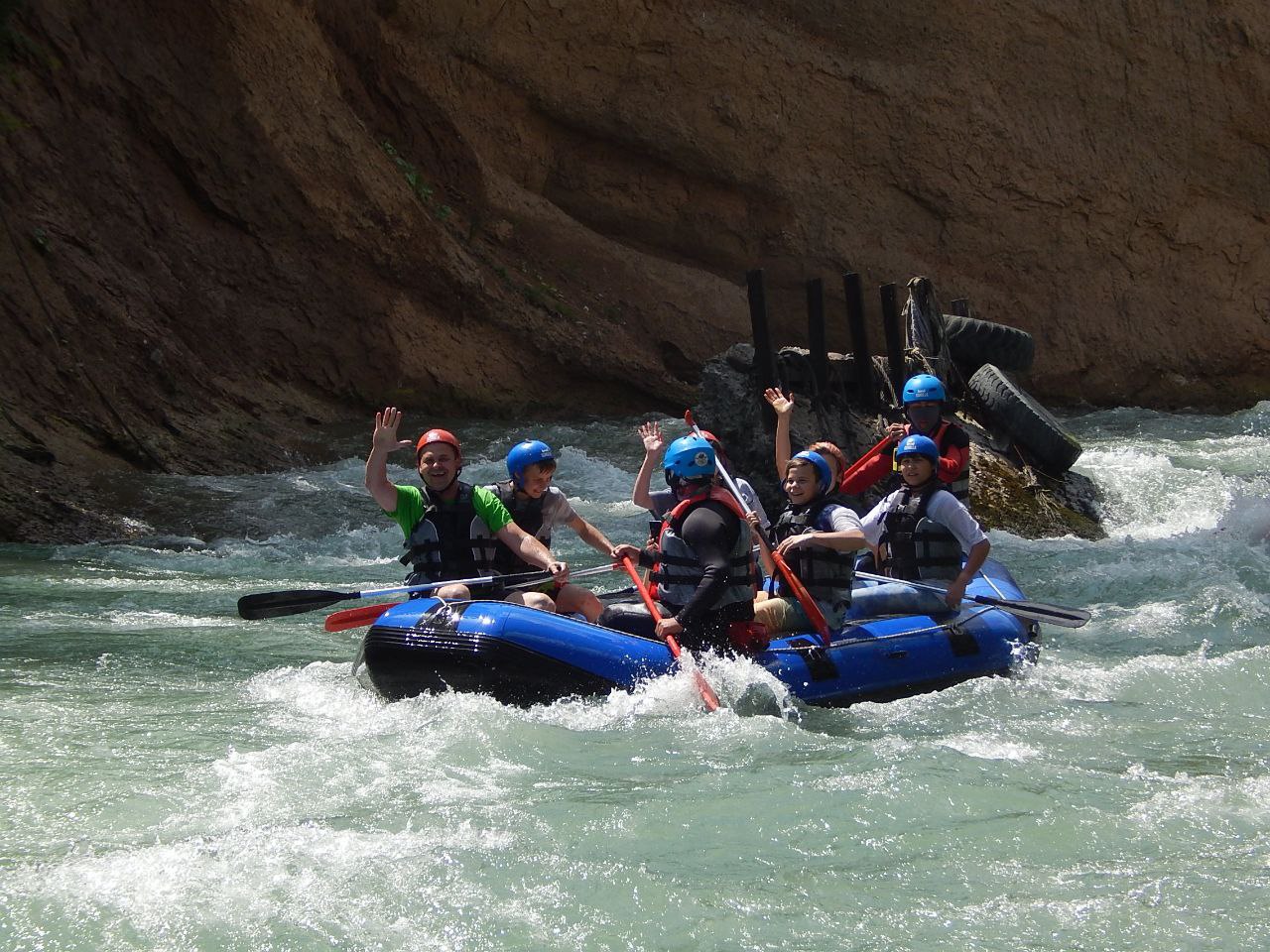
We offer one day  route along Uzbekistan’s part of the Ugam river from village Humsan to Khodjikent water reservoir. The length of rafting route along the Ugham is 11 kilometers. The route starts from “Ugam” resort and finishes in the creek of the river where it flows into the Hojikent water reservoir. On this section raft-men usually make a double trip down the river. The number of obstacles makes your experience really impressive: in some spots the stream will press you against the rocks, in others you’ll need to raft sideways; and all the way down there are above-water rocks and submerged stones. All this is aggravated by the rapid current. However, in case of emergency situation, prompt mooring and urgent landing can be made at any length of the route.

Ugam Mountain River

Booking & price
 Short references +99898 3039846
 https://t.me/ClimberCA –
telegram
 WhatsApp / Viber +7966 065-53-44
 e-mail – your@climberca.com

Uzbekistan Mountains near to Tashkent

Chimgan Mountains

The Chimgan Mountains are invariably attractive for mountaineers. The wide variety of Chimgan and its surroundings allows the activity in all kinds of mountaineering and landscape tourism. Mountains (Small and Greater Chimgan Peaks – 3,309 m) of Chatkal range, plateaus, the Black Waterfall (40 m) at the lower part of Greater Chimgan PeakGulkam waterfalls, attract a lot of tourists from Uzbekistan and abroad.


Chimgan Mountains Trekking Chimgan Photos
Chimgan landscape photographs


West Tien-Shan Mountains Map



Local peculiarities of rafting in Uzbekistan Mountain Rivers

Chatkal Mountain River

The rivers in the mountains of Uzbekistan have the level six of complexity, and that is why it attracts the attention of the world’s strongest sportsmen.
 
Rafting along the rapid
Chatkal River
is the favorite activity of extreme travelers. They are interested in many-day rafting along the route rated as the route of the fifth
category of complexity, as well as in diverse landscapes and natural obstacles. Not less than fifty serious obstacles await the travelers on the river. Among the hardest ones are waterfalls, cascades of rapids, stony shallow areas with rapid current, whirlpools, rocky gorges and sharp stone cogs sticking out of waves. What makes the Chatkal peculiar is the availability of natural obstacles whose complexity is increasing gradually with climax awaiting the travelers in the lower reaches of the river.
 
Those who at least once traveled along the Chatkal will never forget the ‘River of Five Canyons‘. This is how tourists call the Chatkal. The nature here is really imposing and amazes the visitor by its primeval beauty. The grandeur of the Second and the Third Canyon Rocks surpasses all imagination. The Second Canyon makes a breathtaking impression by its towering stone walls and slopes. The Third Canyon is rocky; this is a narrow and winding corridor of 200-300 meters high. At the bottom of the rocks there is still blue water, on each side there are wet, bright and dark-grey rocks with sombre entries to grottos and caves. Overhead there is a narrow line of blue sky which is sometimes blocked by dangerously hanging cornices. Here and there the river-bed narrows to 6-8 meters. On the river banks there are floodplain forests and alpine meadows. The odour of thousands of flowers and conifers is brought by the breeze. The wide intermountain depression is framed with the snowcapped mountains of the Chatkal and Sandala Ridges glaring with the snow. Against the background of the dark-blue sky there rises the colossal Peak of Chatkal which is 4503 meters high. It is the highest point of the Western Tien-Shan. Next to it there towers a mountain, which is a little lower than Chatkal Peak – Chatkal Ushba.


Chatkal Mountain River
 

The length of the Chatkal is 223 kilometers. And only 183 kilometers is fit for rafting. Difference of the heights between the river head and its estuary reaches 1267 meters.

The waterfall of the First Canyon is rather perilous for all sorts of water crafts; it consists of two steps with the dip for about four meters. After the waterfall there comes a hundred-meter area of steeply-falling rapids. In the middle of the Canyon a real eye-catcher is the inflow of the Chatkal’s big left tributary, the Ters, which falls down the rocky ledge.
 
Hargush rapids are considered to be the hardest obstacles in the sailing directions of the Chatkal. It spreads for one and a half kilometers and is noted for its powerful overflows through the stone ranges and boulders. In one place stones almost block the river leaving the space of only two or three meters between them. The stream, breaking through the dam falls down by two-meter flow. When going through these rapids, one should take additional safety measures.
 
After the Hargush rapids, in the order of decrease of complexity, there come rapids of Pigak, Kishlaksay, Second Slalom (Shabrez) and Naizinskiy.
 
Most dangerous rapids are located in the Fifth Canyon. There is also a two-kilometers section where the rocks come close to each other making a
very narrow rocky corridor. The narrowest part in this section is called a ‘diaphragm’ by tourists. Following this ‘diaphragm’, the river gradually calms down and after two kilometers the corridor ends, as well as the last Canyon itself. The river-bed widens again; pebble and sandbanks are seen on both sides of the river.
 
Aurahmat is the last rapid in the sailing directions of the Chatkal. It is opened only during at the period of water discharge for irrigation.
 
Water route along the Chatkal has comfortable but long approaches. One can get to upper reaches of the river both from the Uzbek city of Namangan hrough Chapchama Mountain Pass (2841 meters above sea level) in the Chatkal Ridge – southern variant of access, and from Kazakh city of Toraz hrough Karabura Mountain Pass (3300 meters above sea level) in the Talass Ridge – northern variant of access. Both variants imply nearly equal distances.
 
The set-off route is much more convenient. From the Ugham-Chatkal National Park, where eight-day rafting tour down the Chatkal River closes, there is a modern highway leading to Tashkent, giving the travelers the opportunity to reach the country’s capital just in two hours.
 
In case rafting down the Chatkal River is routed through the territory of both Kyrgyzstan and Uzbekistan,  ts Oyga’ingPskemUgham and Ahangaran sections entirely relate to the Uzbek territory.
 
The route along Pskem and its main part the Oyga’ing river is really unique. In accordance with international classification it falls into the most difficult, the sixth category of complexity. In the world there are few rivers with conditions of rafting similar to Oyga’ing – Pskem section. Among them we can name the Choroh River in Turkey, the Arun in Himalayas, the Blue Nile in Africa and a number of rivers in the Altai Mountains in Russia.
 
The key obstacles accounting for high technical complexity of the route are as follows: the Big inrush in Oyga’ing where the river runs through fragmental blockings of five stone obstructions, the rapids of Shtolnya and Teparskiy obstruction on the Pskem, where the main waterfall is made up by two rocks converging upward. The very names of the rapids Kovarniy (treacherous), Shtopor (cockscrew), Gorka (hill), Vorota (gates) speak for themselves.
 
But the above mentioned difficulties should not scare the inexperienced raft-men into avoiding the Pskem. They are recommended to begin to boat or raft down the Pskem river to Charvak Reservoir from Tepar obstruction, or from Pskem settlement, in which case Taparskiy obstruction should be avoided by carrying the boats round this section. Under the first option the length of the descend makes up 20 kilometers, while under the second
option it is twice as long. It must be said that boating and rafting down the rivers is controlled by experienced guides who know the local conditions perfectly well.
 
Natural beauty in the Oyga’ing and Pskem Valleys can fascinate every traveler whatever experience he or she has. Everything here can make you
be in high spirits: nice weather, the breath-taking beauty of rivers and mountains.
 
Within the limits of recommended areas for rafting, both above rivers fall into the fourth category of complexity. The best time for rafting is April and  May due to good weather conditions. In Uzbekistan this is the time when gardens of the mountain valleys are in blossom. One can hardly find more wonderful natural environs.


Chatkal Mountain River


The length of rafting route along the Ugham is 11 kilometers. The route starts from “Ugam” resort and finishes in the creek of the river where it flows into the Hojikent water reservoir. On this section raft-men usually make a double trip down the river. The number of obstacles makes your experience really impressive: in some spots the stream will press you against the rocks, in others you’ll need to raft sideways; and all the
way down there are above-water rocks and submerged stones. All this is aggravated by the rapid current. However, in case of emergency situation, prompt mooring and urgent landing can be made at any length of the route.
 
Rafting down the Ahangaran river takes more time as the route covers the length of thirty kilometers. It starts in the estuary of the Yakkaarchasay river (7 kilometers off the highway bridge before the rise to the Kamchik mountain pass in the Kuramin Ridge) and closes in front of the Angren water reservoir. The most impressive rapids of the route are Ertash and Koksaray rapids.

Reference: Mountain rafting and steppe hiking
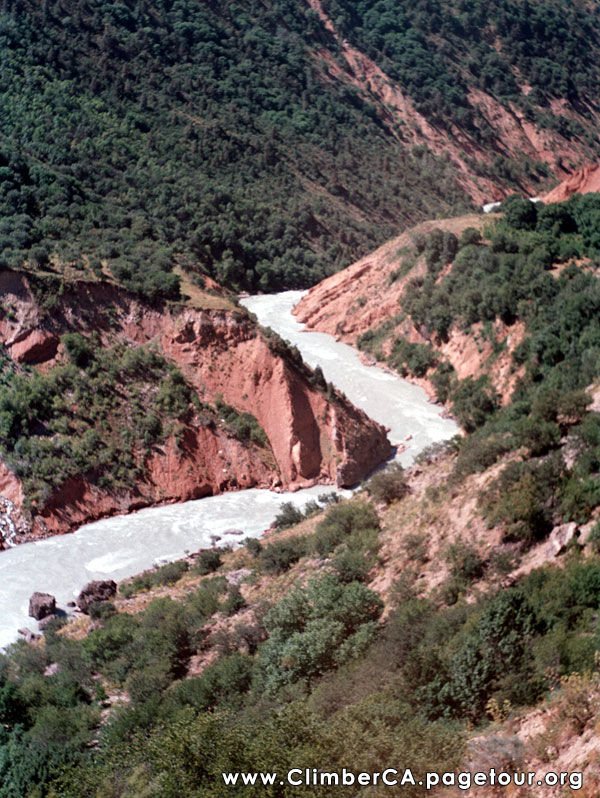

Pskem Mountain River

Pskem Mountain River


Uzbekistan Mountain Horseback-Riding


Uzbekistan Mountain Horseback-Riding

Popular horseback routes in Uzbekistan Mountains near to Tashkent

Horseback riding in Chimgan Mountains

Day 1 Arrival from Tashkent in Chimgan village where mainly ethnic Kazakhs live (90 km). Accommodation is at the Guest House. Walking excursion to the Black Waterfall at the foothill of Great Chimgan.

Day 2
Breakfast. Start at 7 am with horse riding. Up the mountain range which divides rivers of Chimgan and Ishakupriksai, with majestic panorama of mountains, valleys and villages of West Tien Shan. Rest near Kyzyl-Jar (Red Steep) mountain at local shepherds place. Familiarization with rural life, aromatic tea; watch how kurt (dry cottage cheese) and kumis, national drink from mares milk are prepared. After lunch, around Red Steep and down to the foothills of Great Chimgan Peak and return to Tashkent.

Booking & price
Short references +99898 3039846
Contact information

https://t.me/ClimberCA
 – telegram
WhatsApp / Viber +7966 065-53-44
e-mail –
your@climberca.com


Uzbekistan Mountain Horseback-Riding

Mountains, Photo & Sightseeng in Uzbekistan. Sketch itinerary

Mountains, Photo & Sightseeng in Uzbekistan. Sketch itinerary


Contact information

https://t.me/ClimberCA
 – telegram
WhatsApp / Viber +7966 065-53-44
e-mail – your@climberca.com

Chimgan-Beldersay is the most famous natural area in Uzbekistan, which is located in the mountains of Western Tien-Shan (90 km far from Tashkent). Chimgan in the best way approaches for photo leisure with families and children, Beldersay is more appropriate for hiking and trekking with your cameras. The most interesting areas for touring are situated between 2000-2500 m.

Sketch itinerary 2023

Day 01. Arrival in Tashkent. Meeting at the airport, transfer in Chimgan. Arrangements with an accommodation. If the time allows – walking tour around Chimgan Resort area.

Day 02. Early in a morning an ascent to the Western Ridge of Chimgan 2350 m. Majestic panorama of Ugam, Pskem and Koksu ranges of the West Tien Shan surrounding Charvak water reservoir opens up from this point. Descent to Chimgan. Return to hotel.

Day 03. Transfer in Amirsoy mountain resort. Ascent to the highest point (2275 m.) with the gondola lift. Descent is carried out through smoothed relief (steepness up to 30 degrees) without deep gorges and canyons. Archa and the deciduous woods grow on slopes alternating with open glades. Return to hotel in Chimgan.

Day 04. Going up by a good path to the Pesochniy pass (1,832 m). Descending to the gorge of the Gulkamsay river. After rest in the birch grove go through one of the most beautiful places in the mountains of Uzbekistan – the Gulkam canyon. Canyoning. After rest – climb back to the Pesochniy pass (1,832 m), then ascent to the Smaller Chimgan Peak (2,100 m). Panorama of Ugam, Pskem and Koksu ranges. Descent to Chimgan. Return back to hotel.

Day 05. Early morning pilgrimage to Kyzyl-Jar peak (1,866 m), for a spectacular sunrise over the Greater Chimgan 3309 m. Descent to Chimgan. Walk through the Ak-Sai gorge. Return to hotel.

Day 06. Departure by car to Tashkent along the Charvak artificial lake. The road goes around the lake through the Brichmulla-Nanai area, which incorporates villages, situated in the south-east of the Charvak water reservoir at 960 m. You vill have a look Brichmulla and other villages in the area: Yakkatut, Yanghikurgan, Yusufhona, Yubileiniy, Baladala, Bogustan, and Nanai people. A great majority of population are ethnic tajiks. We will finish our excursion in Khodjikent, place of ancient market with ancient platans and rock paintings. Arrive to Tashkent train station. Leave for Bukhara by the night train.

Day 07.
07.00 Meeting at the Kagan train station. Transfer to
Bukhara. A breakfast in hotel;
09.00 Excursion across Bukhara;
19.00 Transfer to train station;
20.50 Train to Samarkand.

Day 08.
01.40 Arrival in Samarkand. A meeting at train station,
transfer to hotel.
10.00. Excursion across Samarkand.
17.30. Transfer to the train station.
18.00 Train to Tashkent.
20.00 Arrival in Tashkent, meeting at train station, transfer in the airport.
End of the program

The cost includes:
All meetings, seeng-offs and transfers on a route.
Service of a professional guide.
Accommodation in guest house in Chimgan (or hotel on your
choice). Registration.
Railway tickets for a train (compartment) Tashkent – Bukhara,
Bukhara – Samarkand.
Railway tickets for «Аfrosiab» train Samarkand – Tashkent.
Service of guides in Samarkand and Bukhara.
Car with the driver during excursion in Samarkand.
Breakfast in Bukhara and Samarkand (and in Chimgan at place
of residence).

The cost does not include:
A food in Chimgan and in the cities.
Lift charge in Chimgan and Beldersay.
Entrance tickets for excursion objects in Samarkand and
Bukhara.

Price.
2 pax:
550 USD – accommodation in guest house.
630 USD – accommodation in hotel (Standard room).
3 pax:
455 USD – accommodation in guest house.
635 USD – accommodation in hotel (Junior suite room).
4 pax:
485 USD – accommodation in guest house.
600 USD – accommodation in hotel (Standard room).

Uzbekistan Mountains near to Tashkent

Chimgan Mountains

The Chimgan Mountains are invariably attractive for mountaineers. The wide variety of Chimgan and its surroundings allows the activity in all kinds of mountaineering and landscape tourism. Mountains (Small and Greater Chimgan Peaks – 3,309 m) of Chatkal range, plateaus, the Black Waterfall (40 m) at the lower part of Greater Chimgan PeakGulkam waterfalls, attract a lot of tourists from Uzbekistan and abroad.


Chimgan Mountains Trekking Chimgan Photos
Chimgan landscape photographs


West Tien-Shan Mountains Map


Uzbekistan Mountain Trekking

Trekking, backpacking, tramping, bushwalking in Uzbekistan


Uzbekistan Mountain Trekking

Trekking in the Nurata mountains

Mountains, Photo & Sightseeng in Uzbekistan. Sketch itinerary

Contact information

https://t.me/ClimberCA
 – telegram
WhatsApp / Viber +7966 065-53-44
e-mail – your@climberca.com

Sketch itinerary 2023

Day 1.
12.00 Arrival in the Majerum village, accommodation in a guest house. The guest house has 4 rooms (15 beds).
13.00 Lunch.
14.00-18.00 Hike around the village (4 km)
19.00 Dinner.

Day 2. Hike
from the Majerum village to the Hayat village.
7.00 Breakfast.
8.00-12.00 Visiting a water mill, the 2000-year-old Oriental biota tree and the ruins of an ancient mosque in the Majerumsay valley. Then cross a ridge to the neighboring of the Andygen village.
13.00 Lunch on a tapchan in the Andygen village.
14.00 Walk rond the Andygen village (the ancient mosque Avlieot and Mazar), then hike along the foothills to the Hayat village.
18.00 Accommodation in the guest house.
19.00 Dinner.

Day 3.
7.00 Breakfast.
8.00-12.00 Hike rond the Hayat village, then along the Hayatsaya valley (7 km), visit the ruins of the old village and Severtsov sheep nursery.
13.00 Lunch.
14.00-18.00 Workshop on baking home bread in a tandoor and cooking pilaf.
19.00 Dinner

Day 4. Hike
from the Hayat village to the Ukhum village.
7.00 Breakfast.
8.00-12.00 Hike from Hayat village through a small mountain ridge to the neighboring Ukhum village (5 km).
12.00 Accommodation in a guest house in the Ukhum village.
13.00 Lunch.
14.00-18.00 Hike round the Ukhum village, to the mazar Eshon-bobo and to the petroglyphs in the Tykchasay valley (10 km).
19.00 Dinner.

Day 5.
7.00 Breakfast
8.00 Departure


Short information – +99898 3039846

Suggested Routes

Route 1: Around the Greater Chimgan Peak (trekking)

Day
1
Transfer from Tashkent to Beldersay (80 km, 2 hrs.). Walking along the gorge of the Beldersay river to the Chet-Kumbel pass (1880 m).
Overnight stay in tents on the picturesque glade. Camp 1.

Day
2
Short day. Walking along the good path to the upper Beldersay river. Ascend to the Kumbell pass (2550 m). Camp 2 near the spring.

Day
3
Very tense day. Climbing along the southern slopes to the summit of Greater Chimgan Peak (3,309 m), descent to the Komsomolec pass (2700 m). Camp 3.

Day
4
Descending from the Komsomolets pass to the gorge of the Mazarsay river. Walking to the place called “Vodoprovod”. Camp 4 near the spring

Day
5
Descending to the gorge of the Gulikamsay River. Visiting the Gulikam canyon. In the afternoon passing through Pesochniy pass (1,830 m) to the valley of the Chimgansay river. Collected by car. Return to Tashkent.

See the map …

Trek Price Per Person

Individual: US$ 560
2 Pax: US$ 300
3 Pax : US$ 250
4 Pax: US$ 225
5 Pax: US$ 200

Transportation Tashkent-Chingan-Tashkent isn’t Included; Personal Equipment isn’t Included. Mountain guide service – included. Guide/Climber Ratio: 1:5 maximum limit. The rent of the tents is included for all period of expedition. Food (survival ration), kitchen and climbing gears – included.
Porter service is available for an additional payment.
The price does not include: personal travel insurance; personal equipment, alcohol, personal expenses.

Route 2: Beldersay ring (trekking).

Day
1
Transfer from Tashkent to the Beldersay river valley to the junction of the Beldersay River and the Marble Rivulet. (85 km, 1,5 hrs).
This is the starting point of the route. Climbing to the left shore of the Marble Rivulet which takes 2,5 — 3 hours. Stop at a grove. Camp.
Resting and walking around. Acclimatization and preparation for the next day.

Day
2
 Breakfast. Climbing to the Urta-Kumbel Pass (1850 m), 1 hour.
Beautiful view opens up from the pass to the Chirchik river valley and the Chet-Kumbel pass. Gentle slope leads to the small grove at the shore
of the Beldersay river. After short rest continue passing under saddle of the Chet-Kumbel pass. Camp.

Day
3
After breakfast four-hour walk towards rock paintings.
Returning to the camp, lunch. Go down along the Beldersay River valley. Departure by car to Tashkent.

See the map …

Trek Price Per Person

Individual: US$ 330
2 Pax: US$ 200
3 Pax : US$ 180
4 Pax: US$ 165
5 Pax: US$ 150

Transportation Tashkent-Chingan-Tashkent isn’t Included; Personal Equipment isn’t Included. Mountain guide service – included. Guide/Climber
Ratio: 1:5 maximum limit. The rent of the tents is included for all period of expedition. Food (survival ration), kitchen and climbing gears – included.
The porter service is available for an additional payment.
The price does not include: personal travel insurance; personal equipment, alcohol, personal expenses.

Booking
 Short information –  +99898 3039846

 https://t.me/ClimberCA –
telegram
 WhatsApp / Viber +7966 065-53-44
 e-mail – your@climberca.com


Trekking:

Trekking combines hiking and camping in a single trip. A backpacker hikes into the backcountry to spend one or more nights there, and carries supplies and equipment to satisfy sleeping and eating needs. A backpacking trip includes at least one overnight stay in the wilderness (otherwise it is a day hike). People are drawn to backpacking primarily for recreation, to explore places that they consider beautiful and fascinating, many of which cannot be accessed in any other way. A backpacker can travel deeper into remote areas, away from people and their effects, than a day-hiker can. However, backpacking presents more advantages besides distance of travel. Many weekend trips cover routes that could be hiked in a single day, but people choose to backpack them anyway, for the experience of staying overnight. These possibilities come with disadvantages. The weight of a pack, laden with supplies and gear, forces traditional backpackers to travel more slowly than day-hikers would, and it can become a nuisance and a distraction from enjoying the scenery. In addition, camp chores (such as pitching camp, breaking camp, and cooking) can easily consume several hours every day. Backpackers face many risks, including adverse weather, difficult terrain, treacherous river crossings, and hungry or unpredictable animals (although the perceived danger from wild animals usually greatly exceeds the true risk). They are subject to illnesses, which run the gamut from simple dehydration to heat exhaustion, hypothermia, altitude sickness, and physical injury. The remoteness of backpacking locations exacerbates any mishap. However, these hazards do not deter backpackers who are properly prepared. Some simply accept danger as a risk that they must endure if they want to backpack; for others, the potential dangers actually enhance the allure of the wilderness. Almost all backpackers seek to minimize the weight and bulk of gear carried. A lighter pack causes less fatigue, injury and soreness, and allows the backpacker to travel longer distances. Every piece of equipment is evaluated for a balance of utility versus weight. Significant reductions in weight can usually be achieved with little sacrifice in equipment utility, though very lightweight equipment can be significantly more costly.


Uzbekistan Mountain Trekking

Special trekking options in Uzbekistan Mountains

Winter backpacking. Ski touring and snowshoeing are alternative forms of hiking (overnight or otherwise) that can be engaged in when the ground is buried deeply in snow.

Thru-hiking is traversing a long-distance trail in a single, continuous journey by starting at one end of the trail with a backpack and hiking essentially unaided to the other end.

Uzbekistan Mountains near to Tashkent

Chimgan Mountains

The Chimgan Mountains are invariably attractive for mountaineers. The wide variety of Chimgan and its surroundings allows the activity in all kinds of mountaineering and landscape tourism. Mountains (Small and Greater Chimgan Peaks – 3,309 m) of Chatkal range, plateaus, the Black Waterfall (40 m) at the lower part of Greater Chimgan PeakGulkam waterfalls, attract a lot of tourists from Uzbekistan and abroad.

Uzbekistan Mountain Trekking

Chimgan Mountains Trekking Chimgan Photos
Chimgan landscape photographs


West Tien-Shan Mountains Map

General routes in Uzbekistan Mountains near to Tashkent

Chimgan-Beldersay Area

• Multi-day trekking around the Greater Chimgan mountain;

• Multi-day trekking through Akshuran pass (1,733 m) to the valley of the Chirchik river;

• Multi-day trekking to the petroglyphs of the Beldersay river;

• Multi-day trekking (thru-hiking) along the Chatkal ridge to Pulathan.

Uzbekistan Mountain Trekking


See the map …

Contact information
https://t.me/ClimberCA
 – telegram
WhatsApp / Viber +7966 065-53-44
e-mail – your@climberca.com


Reference:
 http://en.wikipedia.org/wiki/Trekking


Climbing to Hinchuli peak

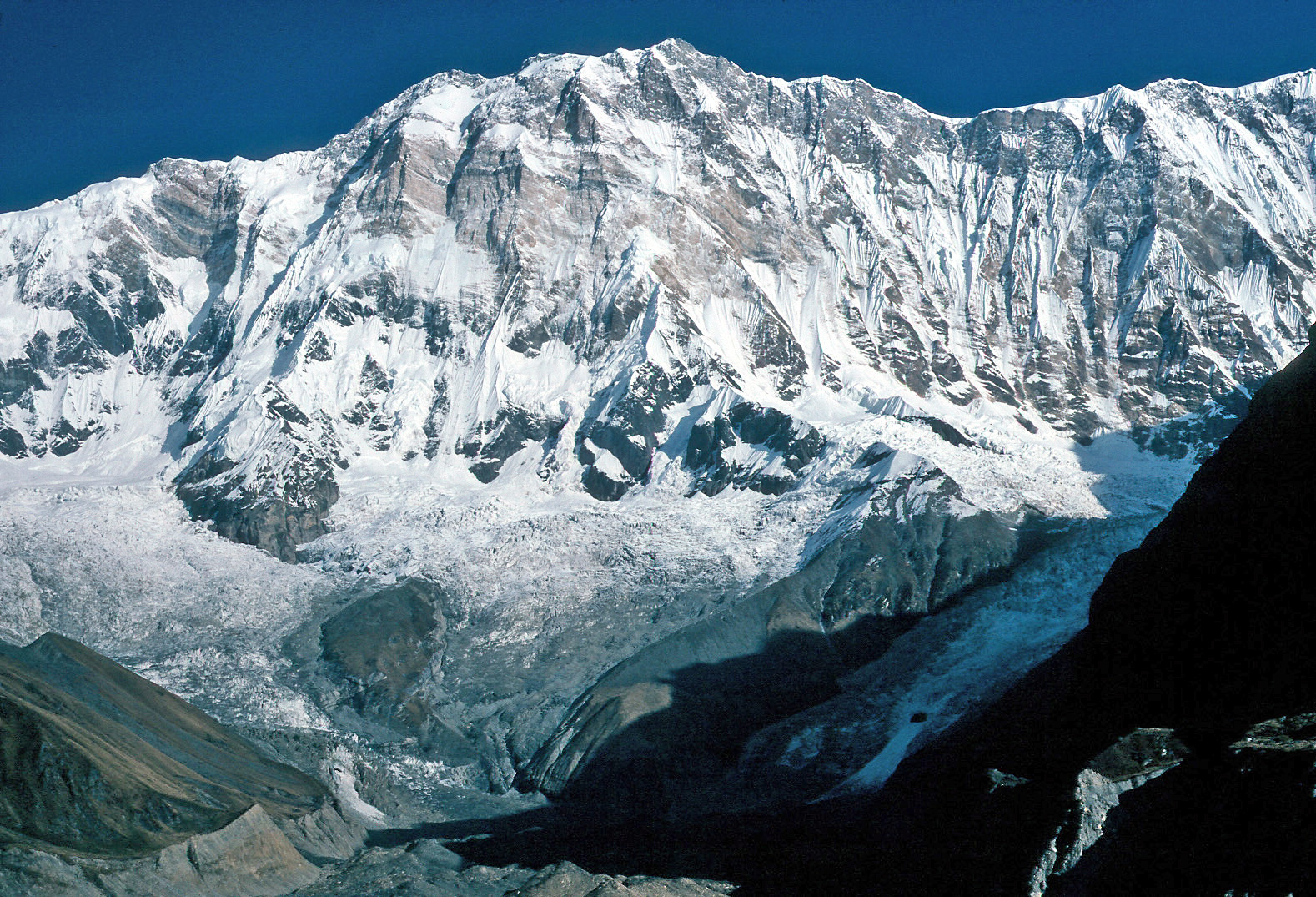
Hinchuli (6,441 m) – is one of three major peaks within the periphery of Annapurna sanctuary and was discovered by Col. Jimmy Roberts. Modi khola is seen from its eastern face which guards the main entrance to Annapurna sanctuary. In the year 1971 via the south east face it was climbed by the American Peace Corps Expedition for the first time. Mt. Hiunchuli still remains an unknown route. So, a few trekkers had climbed this peak because it lies in a remote location. This trekking way is not easy because it passes through steeps and dense bamboo forest, which is menaced by invisible danger of hanging glaciers. From the north, the mountain rises steeply above the moraines of the Annapurna south glacier in a series of shabby buttresses and an well defined and complicated north ridge. This leads to ultimate triangle of fluted ice which forms the summit. In the east, the summit is bounded by a ridge which rises in an icy parabola, and then we descend towards moraines over the lodges at base camp. Climbing Hiunchuli peak requires itinerary, map, good knowledge and experience because it is considered as one of the most difficult climbs for its climbing routes.

Supplier of services: ClimberCA International Consortium. 

https://t.me/ClimberCA – telegram
WhatsApp / Viber +7966 065-53-44
e-mail – your@climberca.com

Note: ClimberCA offers to you the best service & the firm prices of all kind of services we offer on our web-pages. Some services, which we offer to you, are truly unexampled.

Russian >>>

Dates:
5-Apr & 13-Sep

Itinerary

Day 01: Arrival

After arrival at Tribhuwan international airport Kathmandu, our representative will help you to take you and check at the hotel and will brief you about your daily activities. Night at desire hotel in Katmandu

Day 02: Kathmandu

We will have full day Sightseeing Trip in Kathmandu.

Day 03: Kathmandu to Pokhara

We will drive Kathmandu to pokhara which will take about 5 to 6 hours or fly there which will take 30 min. And drive from Pokhara to Nayapul and trek to hile.

Day 04: Trek to Ghorepani [2775m]

We will trek from Hile to Ghorepani.

Day 05: Trek to Tadapani [2675m]

We will Hike to Poon Hill and then trek from Ghorepani to Tadapani.

Day 06: Trek to Ghandruk [1950m]

We will trek to Ghandruk from Tadapani.

Day 07: Trek to Chhomrong [2040m]

We will trek to Chhomrong from Ghandruk.

Day 08: Trek to Bamboo [2340m]

We will trek from Chhomrong to Bamboo.

Day 09: Trek to Deorali [3230m]

We will trek from Bamboo to Deorali.

Day 10: Trek to Annapurna Base Camp [4170m]

We will trek from Deorali to Annapurna Base Camp via Machhapuchhre Base Camp [3820m].

Day 11: Trek to Annapurna South Base Camp [4170m]

We will trek from Annapurna Base Camp to Annapurna south base camp.

Day 12: Trek to Hiunchuli High Camp

We will trek from Annapurna south base camp to Hiunchuli High Camp.

Day 13: Ascend of Hiunchuli Camp I

We will move to Hiunchuli Camp I.

Day 14: Ascend of Hiunchuli Camp II

We will move to Hiunchuli Camp II.

Day 15: Summit of Hiunchuli Peak [6441m]

Then in this day we will climb the mountain.

Day 16: Descend to Annapurna South Base Camp [4130m]

We will trek back from Hiunchuli High Camp to Annapurna south base camp.

Day 17: Trek to Annapurna Base Camp [4170m]

We will trek from Annapurna south Base Camp to Annapurna base camp.

Day 18: Trek to Dovan [2630m]

We will trek back from Annapurna base camp to Dovan

Day 19: Trek to Jhinudanda [1750m]

We will trek back to Jhinudanda from Dovan.

Day 20: Trek to Pothana [1600m]

We will trek back to Pothana from Jhinudanda.

Day 21: Trek to Dhampus Phedi [1580m] and Drive to Pokhara
We will trek back to Dhampus Phedi from Pothana. And drive to Pokhara.

Day 22: Pokhara to kathmandu
We will drive or fly from pokhara to kathmandu which will take about 5 to 6 hours by drive and by air it will take 30 min. Overnight at hotel

Day 23: Kathmandu
You can roam around Kathmandu valley or you can do shoping.

Day 24: Departure
After breakfast we will transfer you to Tribhuvan International airport (TIA) three hour before your flight.

https://climberca.com/index.php/80-hinchuli-peak-climbing-6441-m

Lobuche Peak Climbing

Overview

Trip Duration: 20 days
Trekking Duration: 16 Days
Grade: Challenging
Accommodation: Semi Lodge/ or fully Camping
Season: Sept -Nov / Feb – May
Fixed dates: 1-October & 10-April
Activities: Trekking – Peak Climbing
Highest Point: Lobuche East Peak (6119m).

Supplier of services: ClimberCA International ConsortiumAbout Us
elegram – https://t.me/ClimberCA
WhatsApp / Viber +7966 065-53-44
e-mail – your@climberca.com

Note: ClimberCA offers to you the best service & the firm prices of all kind of services we offer on our web-pages. Some services, which we offer to you, are truly unexampled.

Russian >>>

Lobuche is a Nepalese mountain which is situated close to the Khumbu Glacier in Everest Region. There are two main peaks, Lobuche Far East and Lobuche East but people often have mistaken for Lobuche west Which is a separate mountain further west. Laurence Nielson and Sherpa Ang Gyalzan made the first evidenced ascent of Lobuche East on April 25, 1984.Mt. Lobuche climb is an adventurous than another popular climb. Despite The fact, the admirably fantastic scenes from the Lobuche peak demonstrate the A challenge worth undertaking. For sure the stunning Mt. Everest, you will also Be able to enjoy the view many mountains of the Rongbuk side of the Tibet. Moreover, the mountains you can also trip to villages and monasteries for knowledge Of people’s life there.

First you Will be trekked to Everest Base Camp which will help your body to adapt the Atmosphere while climbing Lobuche and also you can enjoy some times of year Life in high mountains. The happiness you experienced after climbing Lobuche The crest will surely remain with you eternally.

Itinerary

Day 01: Arrive in Kathmandu (1,300m /4,264 ft)

When you arrive at Tribhuvan International Airport (TIA), Kathmandu. You can pick up your luggage and see our representative after the completion of immigration process, who will welcome you in traditional way at the arrival gate. You will be taken to the exact hotel as you plan. You can meet trekking crew at our office after check in your hotel or you can visit Kathmandu valley. At evening, you can enjoy a good traditional welcome Dinner (D) in a traditional restaurant.
As this will your first day in Nepal, We will never miss the opportunity to make you enjoyed and make you feel good.

Day 02: Kathmandu: visiting the attractions and Trek Preparation

Kathmandu holds the historical and spiritual place so today we can start our tour after breakfast, from the place which are considered as World Heritage sites; Kathmandu Durbar Square (Basantapur), Pasupatinath ( the biggest holy temple of Hindus), Swayambunath (the famous monkey temple), Boudhanath (the large Stupas in the world). At noon, you can have a discussion about the trip with our trek leader and other team member. You can ask any question and curiosity regarding trek to our Actual Adventure trek leader. If you have not sufficient gears our leader will suggest you to buy or take on rent.  Then you will be taken to your hotel for overnight stay.

Day 03: Fly to Lukla and Trek to Phakding

We will flight to Lukla early in the morning. We can reach Tenzing and Hillary airport Lukla within half an hour. Lukla is a small town in the lap of high peak. It is a starting point of our trek. We trek towards Phakding. Mt.Nupla and Kusum Kangru can be seen on the way. We will stay all night in Phakding.

Day 04: Trek to Namche Bazaar (3,440 m. /11,286 ft)

We have to walk through Sherpa village and rhododendron forest to reach Namche Bazaar. This is one of a beautiful village, which is comfortable to stay. We can experience the gorgeous views from here. We will spend all night in Namche.

Day 05: Namche adaptation

We will stay another day in Namche Bazaar for adaptation with atmosphere which will help us to climb Lobuche. We will visit to Syangboche, Khumjung and Khude from where close view of Mt. Everest fantasize us. Also we can watch the traditions of Sherpa people.

Day 06: Trek to Tengboche (3867 m. /18,687 ft)

From Namche Bazaar we walk towards Tengboche. Tongboche is the best place that provides the most wonderful scene of the Himalayan. Kwangde (6,187m.), Twachee (6,542m.), Thamserku (6,623m), Kangtega (6,782m.), Amadablam (6,812m.), Naptse (7,879m.), Lhotse (8,501m.) and Everest (8,848m.) are the most vision able mountains from this place. We can also visit the largest Buddhist Monastery Khumbu.

Day 07: Trek to Dingboche (4,530m. /14,800 ft)

We have to go through Imjasta River and rhododendron forest and pass through villages and Mani walls. We can enjoy wonderful views from Dingboche which is the beautiful village from where not only the gorgeous field of barley, buckwheat and potatoes can be seen. We can also enjoy the Island peak, Makalu and another face of Amadablam.

Day 08: Walk to Nangakarshang (5010m.)

We will acclimatize in Dingboche then we will hike to Nangakharshang Gompa from whare we can Observe the clear view of Mt. Makalu.

Day 09: Hike to Lobuche (4,930m.)

We will continuously follow the high alpine region. We can watch the dazzling scene of Nuptse, Lobuche, Pumari, Cholatse. On the way we can see monuments of trekkers, who gave their life while climbing around. We have to stay at Lobuche during the night.

Day 10: Ramble to Everest base Camp (5,360m.)

Our entire group walks to Gorakshep (5,160m.) where we spend a night today then we continuously move towards to Everest base camp through Snowy Mountain. As we reach to the base camp we will return to Gorakshep for overnight stay.

Day 11: Walk to Kalapathar (5545 m.)

We will walk towards Kalapathar (small rocky peak) in the morning. As we reach to Kalapathar we can see the panoramic view of Mt. Everest. We can take beautiful picture there. Then we will forward towards Lobuche upto height 4,930 m. to spend night there.

Day 12: Trek to Lobuche Base camp

We have walk along with rocky way of Lobuche Glacier today. We can be please by the wonderful views of Ama Dablam, Cholatse, Pokhalde, Thamserku etc. We have to spend our night in Lobuche base camp.

Day 13: High camp

Today we will move towards high camp.

Day 14: Summit and Base Camp

Our unit continuously hikes from high camp to Summit (our destination). We can see many other peak clearly from there like Everest, Lhotse, Nuptse, Ama Dablam, Pumari etc.

Day 15: Extra day in Summit

As this is our destination we have to enjoy a day here so we will stay one more day in summit.

Day 16: Base Camp to Pheriche

Our trail goes downward towards base camp to Pheriche. Pheriche offers the dazzling scene of Mountains.

Day 17: Hike to Tenboche

We will walk towards the Tengboche and stay there overnight.

Day 18: Trek to Monjo

Today we will enjoy the downhill walk to reach Monjo,passing Namche Bazaar to spend night. It will be quite long walk.

Day 19: Trek to Lukla

We will end our walk on mountain and prepare for the flight to Kathmandu. This will be the last and unforgettable day in Khumbu. We will pass our night celebrating with Sherpa friends.

Day 20: Fly to Kathmandu

We will leave Lukla today keeping all the memories of our trek and reach to Kathmandu. Actual Adventure representative will be at airport to pick up us to hotel.

Day 21: Kathmandu

This will be your rest day in Kathmandu. You can walk around the Themal to buy souvenir to your friends, family and relatives.

Day 22: Departure for Home.

After Buffet Breakfast, you will be free Till Departure. Then you will Transfer to Kathmandu Airport. We will always hope to see you again with your family, relative, co-workers and friends.

Before your departure we will love to hear the comment from you to improve our self.

Cost Info

Cost includes:

– Airport pick up and drop off by our private vehicle.
– Kathmandu hotel room & accommodation as per your requested
– All land transfer as per given itinerary
– Kathmandu lukla to kathmandu by flight.
– Accommodation and 3 meals a day while on the trek
– Fully escorted trek with fluent english speaking license holder local sherpa trekking guide & each 2 persons 1 porter
– Everest conservation permit and tims permit.
– Lobuche east peak climbing permits.
– All program according to itineraries or can be modified if required.
– Wages, equipment, insurance and other facilities to staffs

The cost does not include

– Nepal entry visa fee.
– Travel insurance.
– Emergency rescue evacuation by helicopter in case of emergency
– Personal spending money & all bar bill
– Items of personal nature i.e. Soft/hard drinks, tips etc.
– International departure airport tax per person.

Note:
The above itinerary can be customized according to your duration of holiday. This is guideline showing tea house or tentative camp night stops. For price and further information contact us at our email: your.climberca@ya.ru

Uzbekistan mountains

The mountains of Uzbekistan enter in structure of Tyan-Shan and Alay mountain systems. On territory turn the western spurs of Tyan-Shan and Gissar-Alay mountain system. To south and west they gradually lower and turn to plains.

Internal (tectonic) power of Earth formed folds grown the powerful ranges of mountains.

The mountains and foothills with brook relief, located in east and south-east part of Uzbekistan, where they unite with powerful mountain deep brook massive on territory of Kirgizya and Tadjikistan. Mainly this Ugam, Pskem, Chatkal, Kuramin ranges and their western and south-western spurs, concerning to Western Tyan-Shan system and Turkestan, Zerafshan and Gissar ranges with their continuous on south-western – Babatag and Kugintangtau ranges, concerning to Gissar-Alay system.

Entering on territory of Uzbekistan its spurs formed radiating bundle of mountain chains, constantly less in north-western and south-western directions. The character example is Karjantau, Maygashkan and Surenata ranges in western Tyan-Shan system and Nuratau, Aktau and Kuratau ranges and Karatepa and Ziadin-Zirabulak mountains, being the last of Pamir-Alay.

Entering in Western Tyan-Shan system the mountain ranges (Karjantau, Ugam, Pskem, Chatkal, Kuramin) began from Talass Alatau (on border with Kirgizstan), further as fan radiate from here and continuos to north-east to south-west.

The more high point of Talass Alatau is mountain Manas (4482m). The high point of Chatkal range on territory of Uzbekistan – Greater Chimgan peak (3309 m). Between Chatkal and Kuramin ranges located Akhangaran valley.

The apexes of Western Tyan-Shan covered with snow and glaciers.

The Chatkal and Kuramin ranges border on north with Fergana valley. From east she borders with Fergana range, from south with Alay and Turkestan ranges. To north-west from Turkestan range raises the Malguzar range, to south-west Chumkartau range. Only the north slopes of Chumkartau entering on territory of Uzbekistan. The valley of Sanzar river separate the Malguzar mountains from Nuratau mountains. The weak point in this valley named Tamerlan gates.

The Nuratau mountains stretch on 180 km. Their north slope is steep, the south slope is gently sloping. The high point of North part of Nuratau mountains is Khayatbashi apex (2165 m). The south part of Nuratau mountains consists from separate apexes (Aktau, Karatau, Karagatau, Gabduntau).

On the south and as parallel to Turkestan range located Zarafshan range. With self eastern part he entering on territory of Tadjikistan. On south from Zarafshan range located Gissar range and his south-western spurs (Yakkobag, Surkhantau, Kugikantau, Baysuntau, Chakgarand other). Here located the highest point of Uzbekistan – the Khazret Sultan (4643 m).

In western part of Gissar range are two glaciers – Batirbay and Severcev. On south of Uzbekistan along of border with Tadjikistan located Babatag range. The high point – Zarkasa (2292 m). The main features of orography of Uzbekistan connected with features of geological structure of above-mentioned the mountain systems.

This bond found expression in these, that between mountain ranges located spacious foothill and intermountain depressions, the large from which is Tashkent-Golodnosteppe, Fergana Zarafshan, Kashkadarya and Surkhandarya.


Mountaineering in Uzbekistan

http://climberca.com/index.php/69-mountaineering-in-uzbekistan

Caravanserais of Bukhara

Since ancient times the centres of economic life of cities in the East were inns as well as caravanserais in the middle ages not only bazaars. In fact, bazaars were closely related to the small crafts and retail trade. And wholesale trade would almost entirely be concentrated in caravanserais. Through both of those sale of goods brought via caravan routes would be conducted. What they represented always intrigued the more inquisitive minds of humankind.

Every spring large caravans would depart from Bukhara on a long journey. They went once a year in three main routes, one to Orenburg, the second to Troitsk and the third to Krasnovodsk, and in each of these caravans up to 50 bays would participate accompanied by yatims.
Each caravan would carry a cannon and armed people to guard the caravan. In the head of each caravan was a caravan-bosh elected by the bays. There were three of them: Bukhara. Shafirkan and Kazakh.
In each caravan several hundreds of loaded camels would go. On an assigned date and time they gathered at Samarkand gates on the road as then headed towards Shafirkan where at the house of one of the bays there was a meeting point and beasts of burden waited.
From Karshi, Khisor, Shahrisabz and other locations of the khanate small caravans consisting of 10-15 camels would also make way to Bukhara. They would head for the city, to the municipal serais where they put the natural tax they brought with them – millet, barley, etc.

http://pagetour.org/wp/caravanserais-of-bukhara/

Artistic Crafts of Uzbekistan

Ancient traditions of carpet weaving, embroidery, dying of fabrics, jewelry art and chase, plaiting from willow rods, carving and painting on the wood were developing and improving for centuries. In the result the unique art schools had appeared, where each of the craft centers was developing its originality. Rishtan ceramics, Urgut embroidery, Bukhara golden sewing, Margilan satin, Karakalpak and Khorezm jewelry, Chust scull-caps, Pap encrusted knives, Tashkent fettling are widely known.

http://pagetour.org/wp/artistic-crafts-of-uzbekistan/

TASHKENT: PAST AND PRESENT

Tashkent is a city on border of agricultural oases of Central Asia and boundless Eurasian steppes. It exists already more than two thousand years. In an extreme antiquity when this city still was known as Chach, it was not very large and on history value considerably conceded to more southern neighbors – to Samarkand and Bukhara. But archeologists today confidently identify in territory of modern capital of Republic of Uzbekistan some significant archeological objects, that are ancestors of Tashkent. And the kept monuments of ancient architecture have venerable age. Thus, well-known underground chilla-khana at Zain ad-din bobo mausoleum is constructed in XII century. But a great amount of ancient monuments of Tashkent which can be seen today, concern to XVI century when Tashkent became capital of one of the big state appendages of Sheibanid and ruled by authoritative branch of this dynasty.

https://tashkent-info.narod.ru/en/index.htm

Morning Palov
Ceremony of the morning palov is held during the wedding (“sunnat-tuyi” or marriage ceremony) and commemoration ceremonies ( 20 days and 1 year after the date of death). Organizers of the wedding appoint the date and time of the morning palov, having agreed preliminarily with the mahalla community or quarter’s committee. Invitations for this day are sent to relatives, neighbors and friends. In the evening, one day before the event the ‘sabzi tugrar” ceremony (slicing the carrot)is held which is usually visited by neighbors and close relatives. After the ceremony all participants are invited to the table. Usually, performers are also invited to the “sabzi tugrar” ceremony. At the table during the feasting elders distribute the duties among the present. Morning palov should be ready by the end of the morning prayer – “bomdod namozi”, because the participants of such prayer should be the first guests. By the end of the morning prayer the sounds of karnay, sunray and tambourine announce the start of the morning palov serving ceremony.
Guests take seats around the tables and after reading the fotiha (wishes) flat bread and tea are served. Just then the palov in lagans (large plates) are served – one for two. After the feast the lagans are removed, and guests again make a fotiha, and having thanked the host, they leave. Upon their departure the tables are fixed quickly for reception of new guests. Morning palov ceremony usually lasts for one and half – two hours. During this time the invited performers sing songs. At the end of morning palov the honorable guests are given gifts – usually these are chapans (traditional men’s robes). Commemoration palov differs from the celebration one by that the guests having taken the seats read the suras from the Qur’an and commemorate the passed away person. The feasting is finished also by reading suras from the Qur’an. Performers are not invited to the commemoration ceremony, and tables are fixed more moderately comparing with celebration. One should note the specific feature that the celebration and commemoration palov ceremonies are served only by men.

http://pagetour.org/wp/uzbek-customs-wedding-and-morning-palov/